As recruiters will remind you whenever given the opportunity, it’s always a good idea to have a hiring plan before jumping into the hiring process.
Without one, it’s easy for the process to drag on as stakeholders realise they are looking for different profiles, or an impossible mix of capabilities and experience. This turns into a massive waste of time for everyone involved.
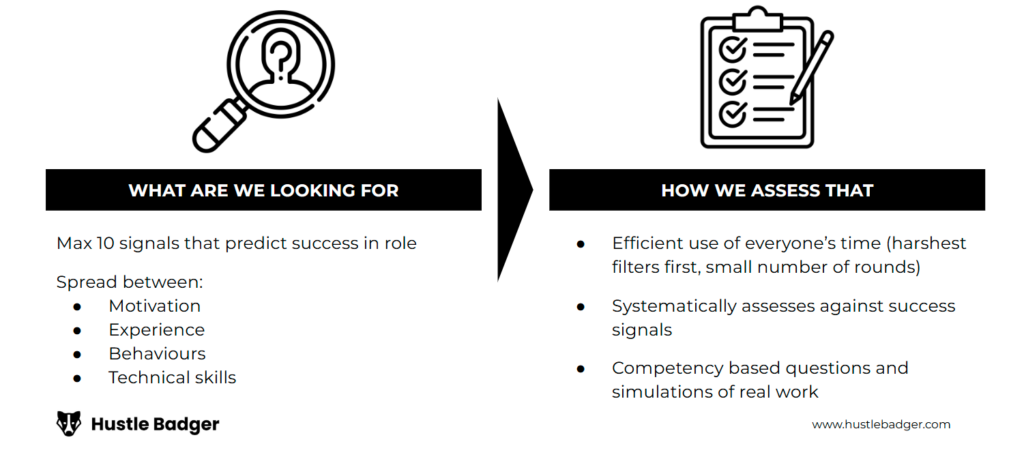
Ideally your hiring plan is based in
- Your competency framework: you’re able to describe the behaviours, skills and level of your candidate
- Clear gap analysis: you know where there are holes in your organisation, and missing skill sets
It’s easy to see someone leave and think ‘Let’s replace’, but don’t skip these steps. Your hiring plan is part of your overall talent management process, and needs to fit clearly into your organisational goals and levels. Getting this right has high ROI.
A good hiring plan will cover:
- Expected competencies: what are you looking for in candidates
- Reference profiles: what does this look like in practice
- Interview process: how you will assess candidates on these competencies
A good format for creating a concise picture of who you are hiring for is to think across four aspects:
- Experience: what has this person done before in previous roles?
- Motivation: what intrinsic motivation would fit this role well?
- Soft skills: what are the behaviours and ways of communication you are looking for?
- Technical skills: what are the learned skills that this person needs?
By ensuring that you have at least one requirement in each category, and no more than 10 overall, you make sure you are taking a balanced approach to finding someone, without looking for an unrealistic combination of traits.
We’ve made a template to help keep you structured.
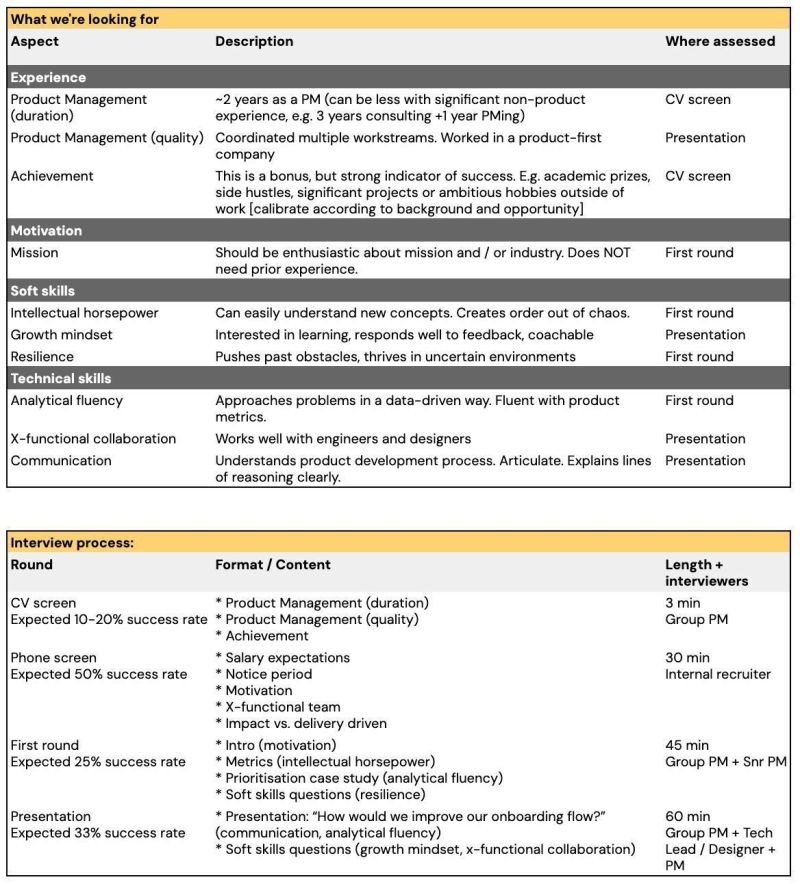
The Hustle Badger hiring plan template