Matt LeMay is the author of Impact‑First Product Teams, a product consultant and public speaker.
He has worked with organisations such as Google, Spotify and Mailchimp and specialises in helping product teams connect day‑to‑day decisions with the metrics that matter to the business.
This is a tutorial from Matt’s recent live class with Hustle Badger.

Core principle taught by Matt: every team must be able to justify its cost by showing measurable business impact.
“If you were the CEO of the company, would you fully fund this team?”
Below Matt teaches how to recognise low‑value work, set impact‑aligned goals, choose work that actually moves the business needle, and create the conditions for cross‑team collaboration and bravery. Let’s get into it now.
Making the team answer the CEO question
The single most effective diagnostic Matt offers is a simple question to focus every product conversation:
Would you personally fund this team if you were the CEO?
How to use the question:
- Ask it in a workshop with product, design and engineering present. Make the question explicit and public.
- Require an evidence‑backed answer: what outcomes will this team deliver, in which timeframe, and measured in the company’s units (revenue, conversions, retention, etc.)?
- If the team cannot answer, treat this as a signal to rework goals or reprioritise work.
Concrete outcome: teams that can answer this question are more likely to be viewed as “good investments” by leadership and are better able to defend their roadmap when challenged.
👉 Get more free live classes
📽️ Follow us on Youtube
Spot and stop the low‑impact death spiral
Matt labels a common organisational pattern the “low‑impact death spiral.” It begins with well‑intentioned, low‑risk work that is easy to ship (cosmetic changes, small surface fixes).
Over time these small additions:
- Accumulate into product complexity
- Create more cross‑feature dependencies
- Increase coordination and governance overhead
- Make future high‑impact changes harder and costlier

Practical steps to reverse the spiral:
- Audit recent releases for customer value: list shipped items and estimate their real user or revenue impact (order of magnitude).
- Introduce a “subtraction gate” before new work is approved: for each new feature, require a committed removal, simplification or sunset of something else.
- Prioritise changes that reduce complexity (e.g. remove duplicates, consolidate flows) before adding new surface features.
- Log the coordination cost of existing features to quantify the hidden tax low‑impact work creates.
“This belief that doing low impact work does no harm is wishful thinking and it’s not true.”
Make team goals one step away from company goals
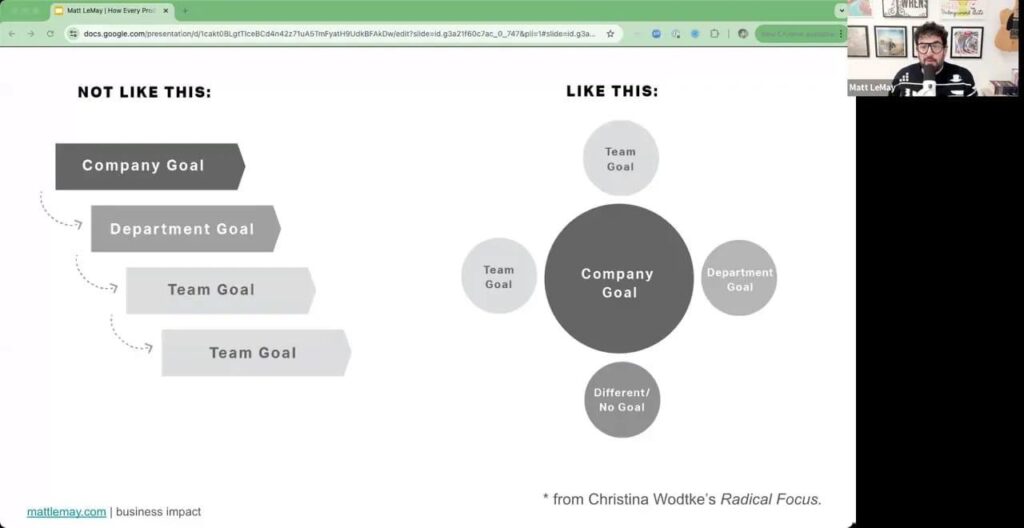
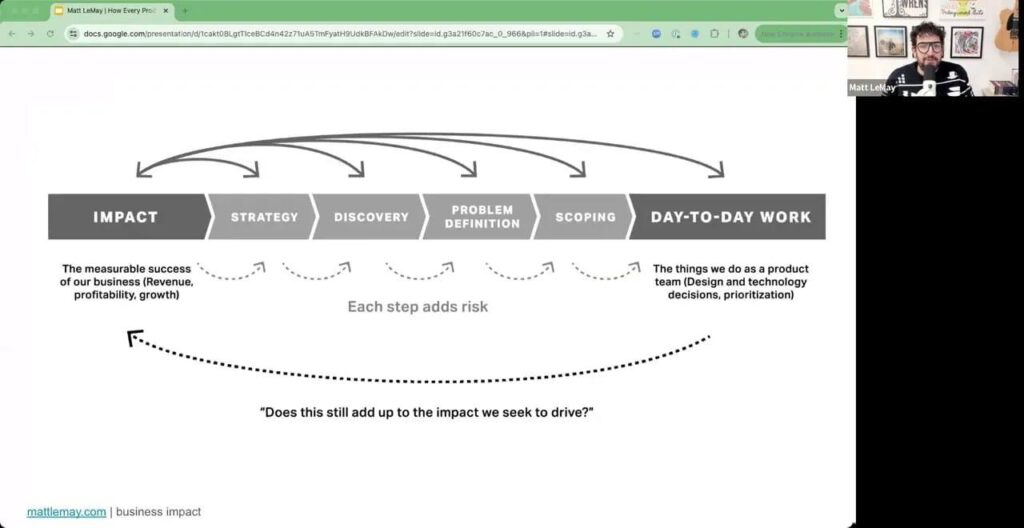
Matt recommends replacing cascading lists of department OKRs with a simpler architecture: make the company goal the centre of gravity and keep team goals at most one logical step away. That increases clarity and compels cross‑functional work.
Example from a fintech client:
Company goal:
£50m additional ARR by year end.
Team goal:
convert 10,000 single‑product users into multi‑product users (one step away — conversion → revenue via CLTV).
How to implement on your team:
- Translate the company metric into a unit your team can affect: i.e. users converted, $ in MRR, retention uplift.
- Set one tangible target with a deadline that is decisive enough to force trade‑offs.
- Limit team goals to no more than five: ideally one to three—so focus becomes enforceable.
- Express goals in the same unit as the company: avoid vague internal metrics that don’t roll up transparently.
Benefits:
- Teams can explain how their work contributes to the business in boardroom terms.
- Cross‑team conversations become about achieving a shared number, not defending features.
- Teams make better prioritization decisions because the impact is explicit.
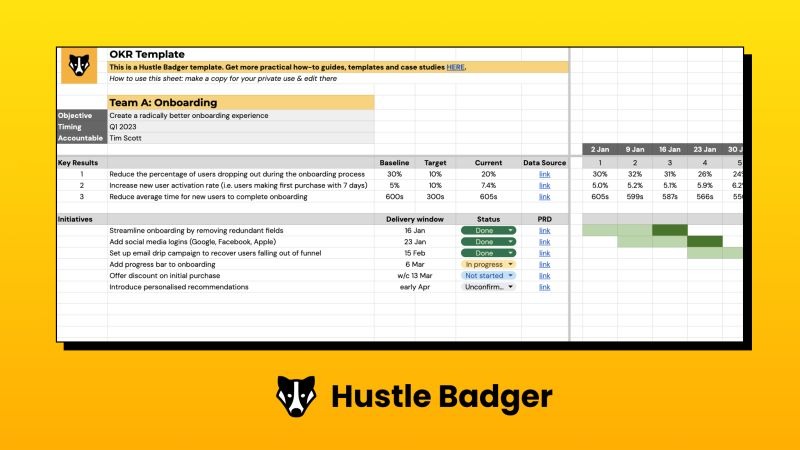
Setting effective OKRs
Prioritize by impact in the same units as your goal
Prioritization frameworks (ICE, RICE, MoSCoW) are useful tools, but they fail when abstract scores replace outcome‑aligned measurements. Matt recommends starting from the outcome and measuring potential impact in the same units as your goal.
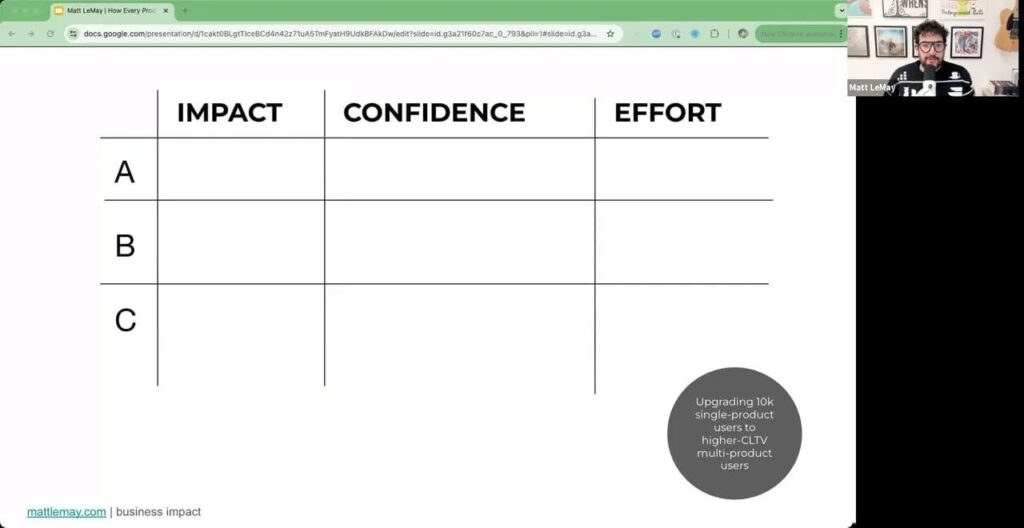
Example: Fintech co prioritization:
A product manager scored three candidate features using ICE.
Feature A scored highest because it was low effort and high confidence.
When asked how many users each feature would convert toward the 10,000 target, the team discovered: A ≈ 100 users, B ≈ 3,000 users, C ≈ 50 users.
Despite its high ICE score, feature A was not worth prioritising because it barely moved the team goal.
Practical prioritization approach:
- List candidate initiatives.
- Estimate probable impact in the team’s goal unit. Order‑of‑magnitude is sufficient.
- Estimate effort and confidence, but only to the extent that they change the expected contribution to the primary goal.
- Prioritize only the initiatives that contribute enough to the team’s overall goals to warrant further consideration.
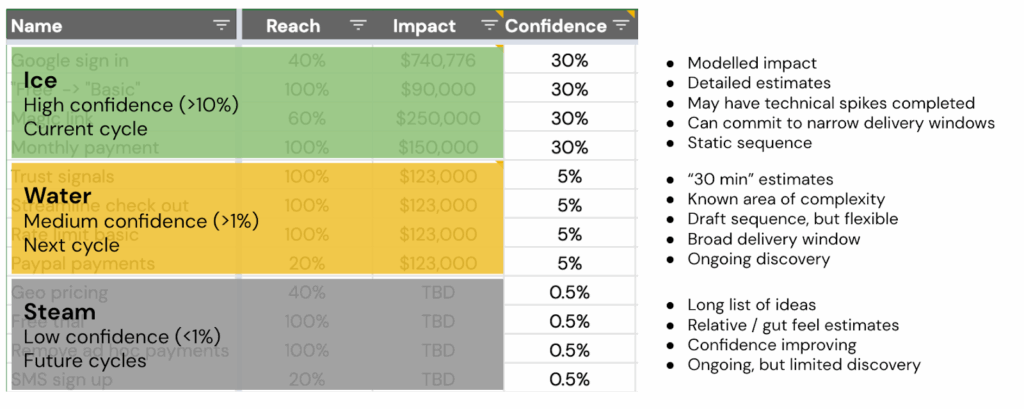
Guide to making the RICE framework effective
Quick checks to avoid wasting effort:
- Reject items that cannot plausibly move the needle (e.g. <1–2% of target) unless they unlock a larger initiative.
- Require a visible measurement plan: how will you know the impact after release, and on what cadence?
Use constraints to force subtraction and rapid learning
Constraints are not restrictions; they are design tools that focus effort and accelerate feedback.
Matt advocates “unsmart constraints” — simple limits that compel teams to make trade‑offs rather than debate possibilities.
- One‑page plans: capture the problem, the target metric, one proposed experiment and a clear timeline on a single page.
- One‑hour reviews: require initial proposals to be drafted in no more than one hour before group review.
- Limit goals to three or fewer: eliminate the impulse to carry fifteen priorities forward.
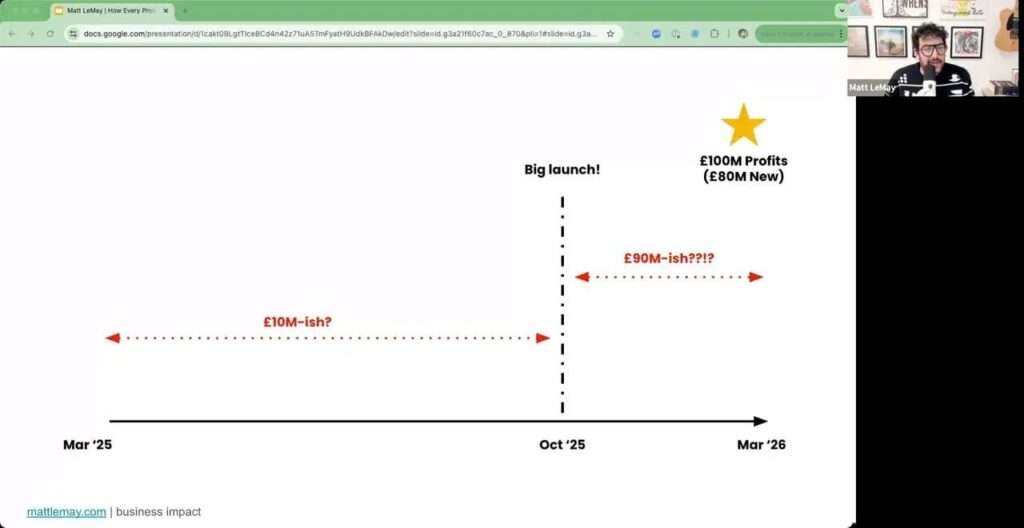
Example: UK Ad tech company:
The team’s VP promised an aggressive revenue goal (20 → 100 million). The team put that promise on a timeline.
With the deadline exposed, the team realised they could not wait for the big relaunch in October; they needed smaller, monetisable releases earlier.
The result: the team started shipping in June and built a phased monetisation plan aligned to the timeline.
How to apply constraints now:
- Create a one‑page commitment for each candidate initiative: problem statement, primary metric, target, timeline, owner.
- Make a deadline explicit and map interim measurable proxies: what do you expect to see at 1 month, 3 months?.
- Enforce a subtraction rule: for each new feature, identify an existing item to retire or simplify.
Cultivate bravery and persistence at the team level
Organisational structure and reorgs rarely solve misalignment; courageous individuals do.
Matt emphasises the impact of small acts of leadership inside teams:
- Volunteer to work across functional boundaries when it’s necessary to reach the goal.
- Be the person willing to propose a number, even if it might be wrong, because an explicit target is far more useful than endless ambiguity.
- Persist when leadership attention temporarily fades: teams should self‑impose the discipline required to meet their targets.
Example: the hero who said the number:
During a prioritisation workshop, one team member blurted “20%” as a target. It turned out the VP had earlier cited a hugely larger number (20 → 100 million).
The person who spoke first created the opening for the team to confront the realistic timeline and to rework their launch plan to meet the higher expectation.
“The power is within all of you.”
Checklist: What to do this week to become more impactful
- Run a 60‑minute workshop and ask: “If you were the CEO, would you fund this team?” Capture the answer and the evidence.
- Identify one high‑impact metric (company unit) your team can influence and record it publicly.
- List your top five proposed initiatives and estimate their impact in the team metric unit (order of magnitude).
- Apply a subtraction rule: for every new initiative, name one thing to stop or simplify.
- Create one one‑page plan for the highest expected impact initiative and commit to a 4‑week learning milestone.
- Set public measurement cadences (weekly proxy, monthly outcome, quarterly revenue/lagging review).
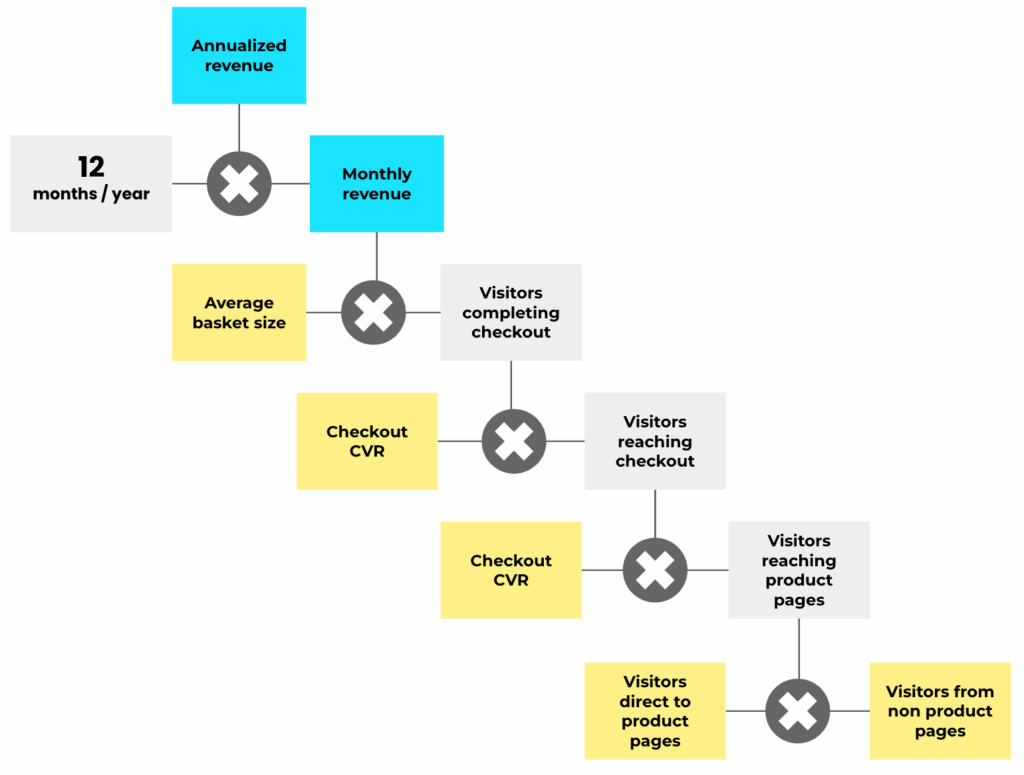
How to build an impact model for your product roadmap
Templates to support
Goal one pager: follow this structure
- Problem statement (1 sentence).
- Primary metric and unit (e.g. users converted, £ revenue).
- Target and deadline.
- Key assumptions and dependencies.
- Experiment / first deliverable and 4‑week learning criteria.
Impact model template
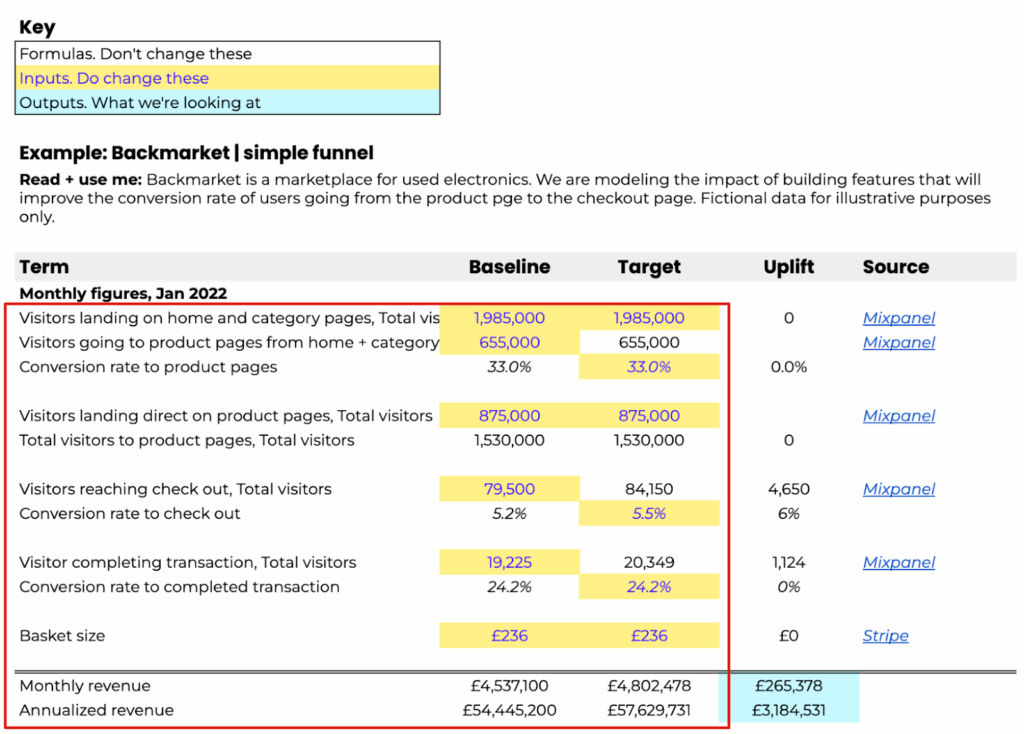
The Hustle Badger Impact Model Template
Estimating impact is something which becomes easier the more often you do it.
Remember that all models are wrong, but some are useful. The meaning of this is that your model will never accurately predict the future, but it will show you orders of magnitude, helping you identify impactful vs non impactful initiatives. Just not to the decimal point.
Backlog template with RICE prioritization
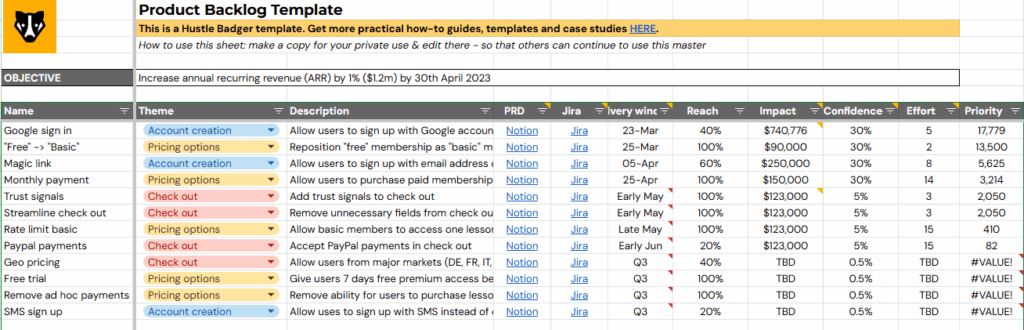
Guide to backlog prioritization here
How to keep focused
- 1 pagers: Replace slide‑deck gatekeeping with short, iterative reviews: require a one‑page recommendation instead of a 30‑slide plan.
- Insist on clear guard rails: a small set of company metrics, a cadence for evidence, and clear decision owners.
- Reward subtraction: recognise teams that simplify, reduce complexity, or deprecate features to make high‑impact work possible.
- Provide short feedback loops and availability: When teams move fast to test, leaders must be ready to review and unblock quickly.
Signs your team is aligned to impact
- Team can explain its contribution to the company metric in one sentence.
- Work is prioritized by expected contribution to that metric, not abstract scores.
- Decisions include a subtraction: additions are balanced by simplifications or sunsets.
- Teams publish a timeline with interim learnings and regular measurement cadences.
- Cross‑functional coordination is driven by a shared number, not feature territory protection.
Wrap up
Use these steps to shift your team from activity to impact: choose a measurable business metric, make it the lens through which all priorities are judged, force subtraction through constraints, and encourage the bravery required to propose and test real numbers.
The result: clearer prioritisation, fewer meetings, fewer low‑value features and a team that leadership recognises as a genuine business investment.
Hustle Badger Resources
[Live classes]
[Bitesize courses]
[Full length courses]
[Articles]
More Resources from Matt LeMay